KOLCO CLUB · Datasheet
What is in the data, and how we know.
The documentation behind the overview: class distributions, the verification we ran on the public sample, the label schema, worked examples and the provenance record. Written for the person who has to fill in a model card.
Diversity is the product.
Volume is easy to buy and worthless on its own — a million near-identical pages teaches a model one page. What a design model needs is spread: across business context, layout, palette, format and drawing convention. These are the axes the catalogue is actually built on, and the counts are the shipping counts.
Posters & print
- Business verticals
- 205
- Layout families
- 587
- Colour palettes
- 519
- Print formats
- 23
- Typographic themes
- 56
- Product types
- 7
- Trim sizes named
- A2–DL
Infographics
- Sectors
- 56
- Subjects
- 896
- Towns and cities
- 417
- Page formats
- 16
- Production lines
- 4
- Reporting periods
- 6
- Smallest to largest
- 1000–3000px
Floor plans
- Unit types
- 5
- Footprint shapes
- 6
- Circulation types
- 6
- Palettes
- 16
- Typefaces
- 8
- Symbol styles
- 25
- Dimension systems
- 3
Floor plans by unit type
By footprint shape
By orientation
These distributions are uneven on purpose, and we would rather you saw it here than found it after signing. Three-bedroom plans and L-shaped footprints dominate because that is what gets built; carpet areas cluster hard between 1,000 and 1,249 sq ft, with a median of 1,123. If your model needs a flat distribution instead of a realistic one, say so — a release can be sampled to a target balance, or a commissioned set can fill the thin classes.
Measured, not asserted.
Every claim below was run against the 191 SVG files in the public review sample — stratified, drawn at random within each format, and not retouched. Download the sample and reproduce the whole table.
| Check | Posters | Infographics | Floor plans |
|---|---|---|---|
| Files in sample | 92 | 48 | 51 |
| Parse as valid XML | 92 / 92 | 48 / 48 | 51 / 51 |
| Carry live, non-empty <text> | 92 / 92 | 48 / 48 | 51 / 51 |
| Reference a remote font or asset | 0 | 0 | 0 |
| Median file size | 88 KB | 76 KB | 41 KB |
| Median live text nodes | 7 | 61 | 151 |
| Median vector paths | 20 | 32 | 275 |
Fonts travel inside the file as data URIs, or are named system faces with generic fallbacks. Nothing reaches outside itself for a font or an image, so a file renders identically wherever it lands — including inside a training pipeline that has no network.
Six real files, with the labels they ship with.
Nothing below was written for this page. Two of the posters carry Dublin Core RDF inside the SVG itself — title, creator, type, coverage and subject tags — and the rest are read straight from the CSV index that travels with each pack. This is what a training pair looks like before you touch it.

- dc:title
- Day Spa Poster — Season’s pick: massages
- dc:type
- Poster
- dc:coverage
- Character Scene Poster
- dc:subject
- beauty, day-spa, editable-text, festive, flat, flyer_a4, poster, vector
- geometry
- 1240 × 1754 · 8 text · 45 paths
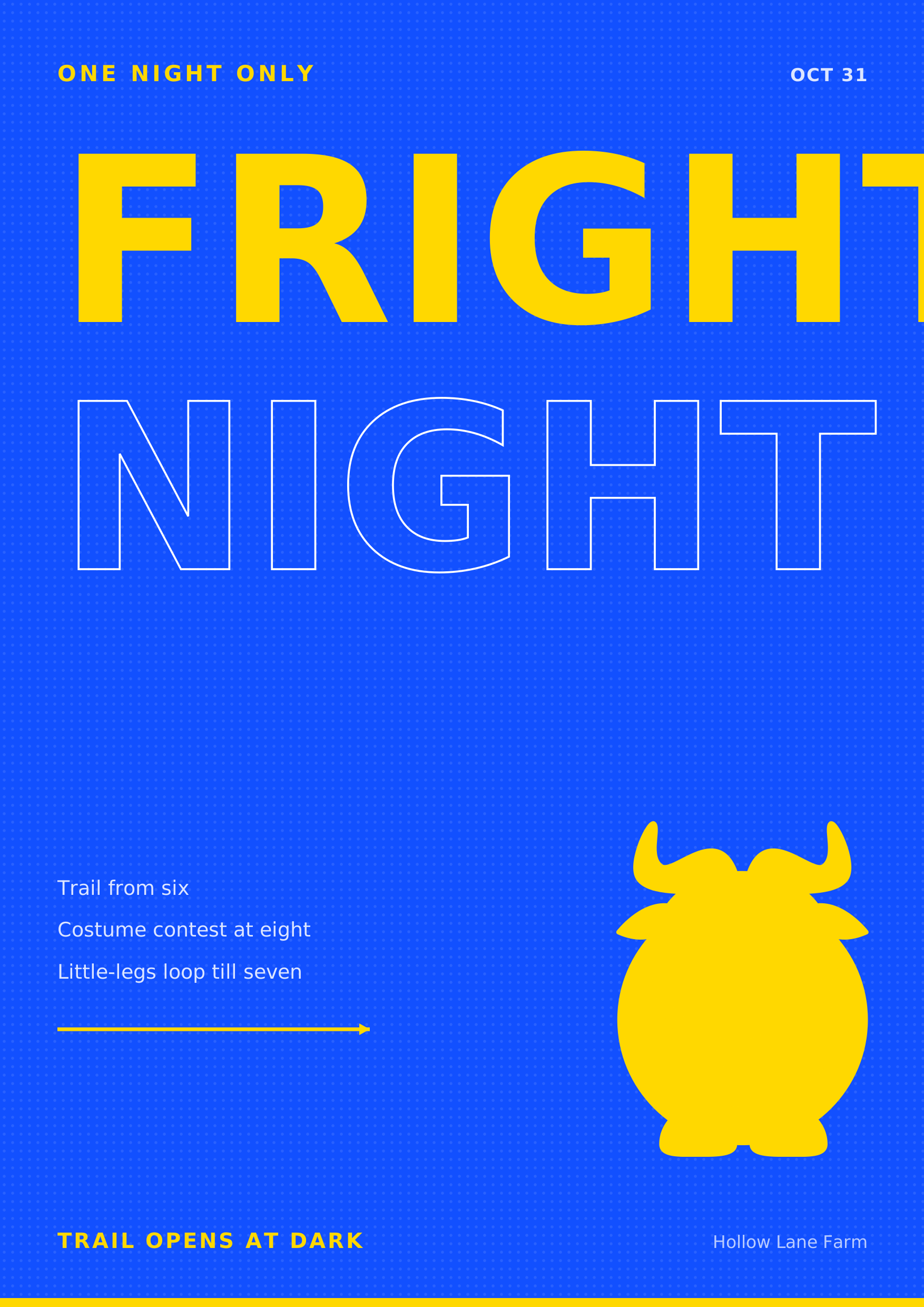
- dc:title
- Halloween Event A3 Poster — Bold Type with Cartoon Gnu Art
- dc:type
- Poster
- dc:coverage
- A3 Portrait Poster
- dc:subject
- a3-p, bold-type, cartoon, dark, editable-text, gnu, halloween-event, poster, vector
- dc:creator
- The Doodle Desk
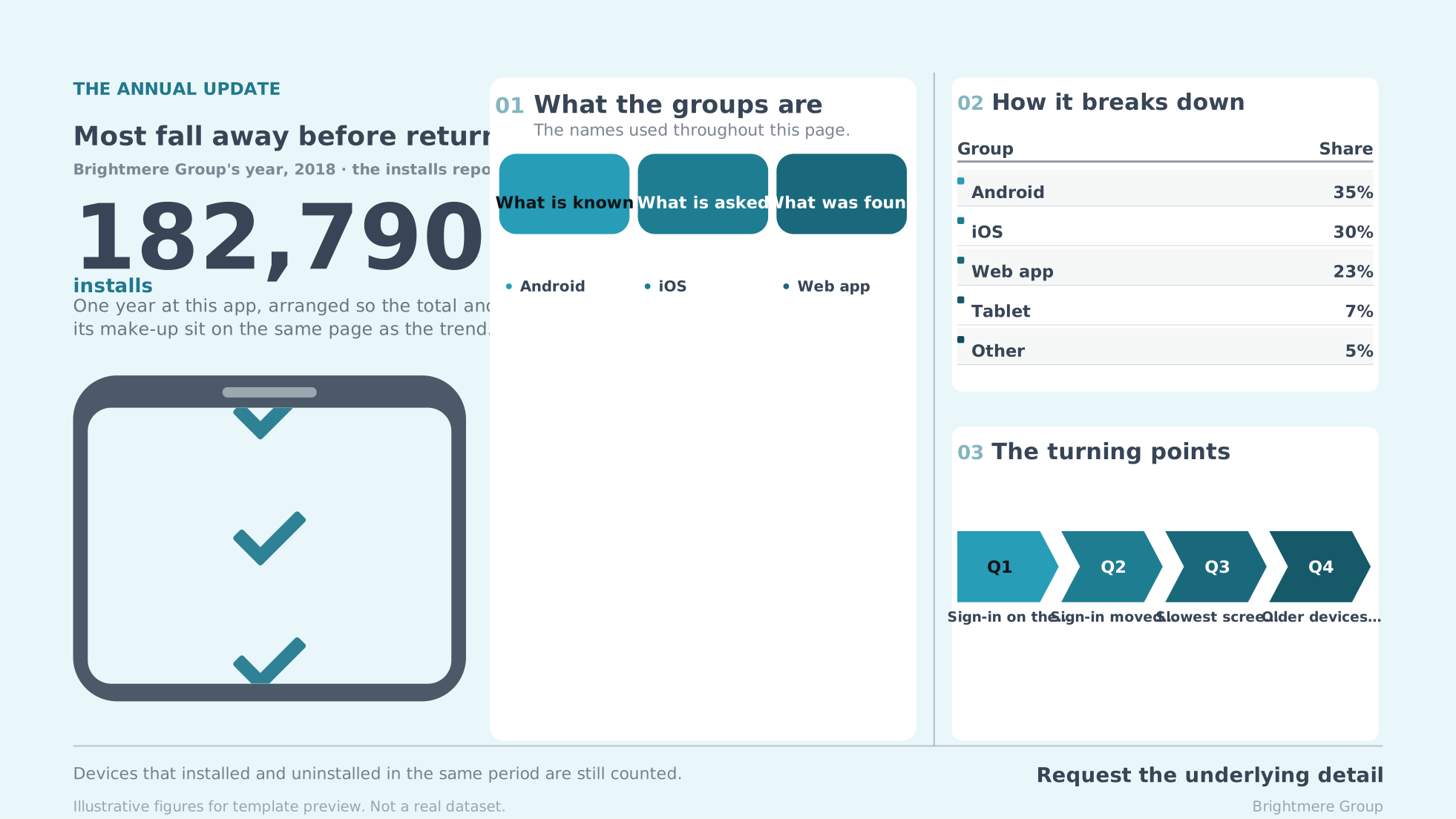
- line
- Slide-deck
- subject
- app · Brightmere Group · 2018
- page_size
- 16:9 Widescreen · 1962 × 1104
- typefaces
- Figtree
- palette
- Bar-chart PowerPoint family
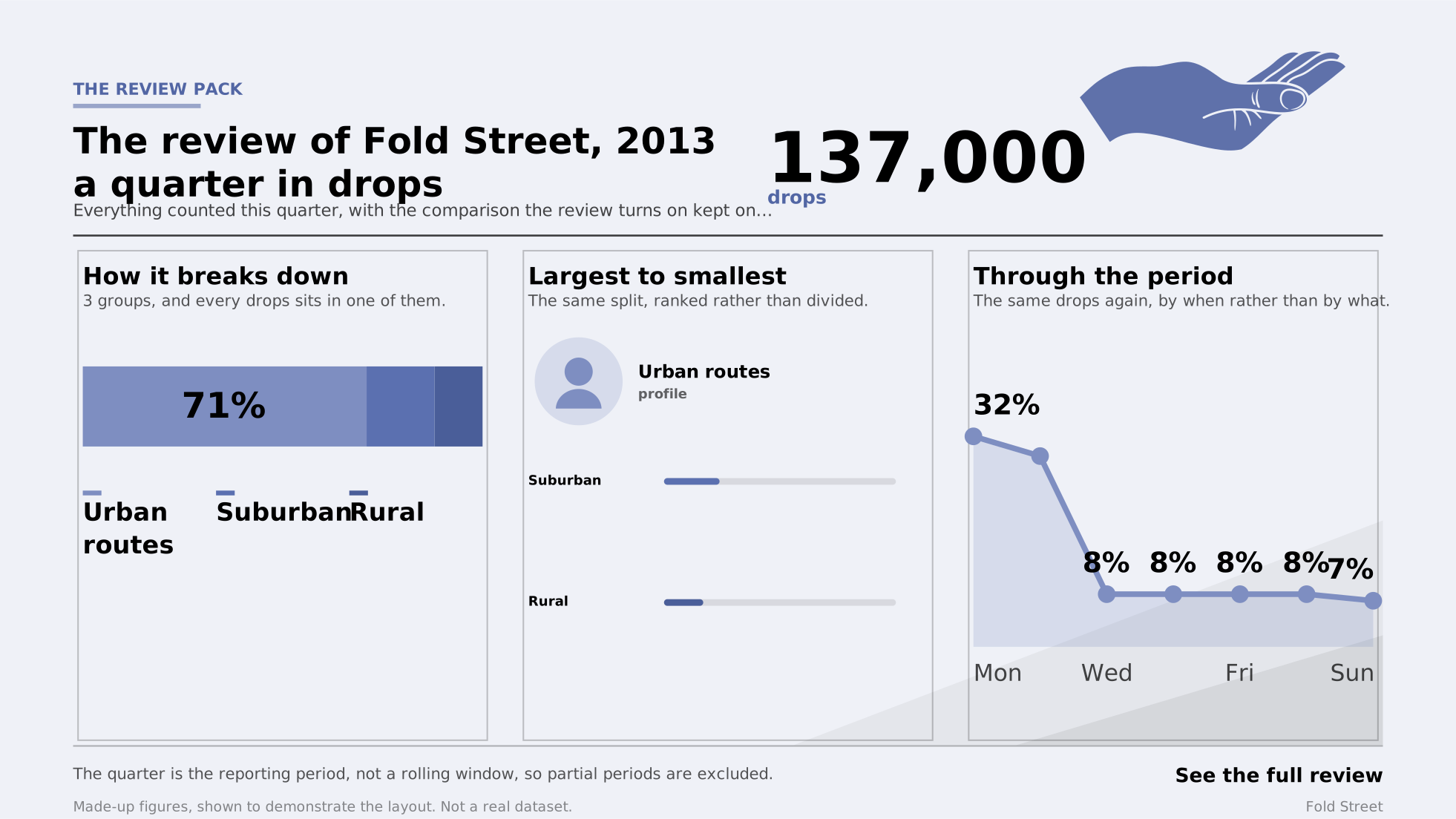
- line
- Slide-deck
- subject
- fleet · Fold Street · 2013
- page_size
- 16:9 Widescreen · 1962 × 1104
- typefaces
- Gudea
- palette
- Social Media 3 Infographics Light
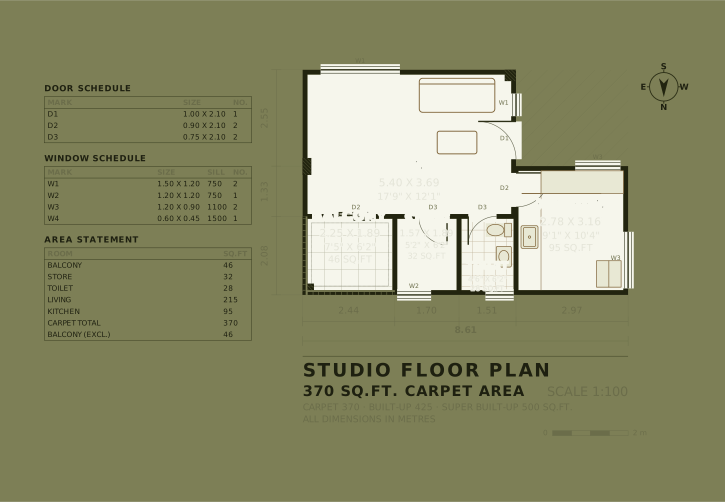
- unit
- STUDIO · 369 sq ft · 34.31 m²
- programme
- 5 rooms · 1 toilet · 1 balcony
- geometry
- L footprint · open distribution · N facing
- drawing
- metres · olive · geometric · duvet-plain
- score
- 98.1 · 21.0 KB
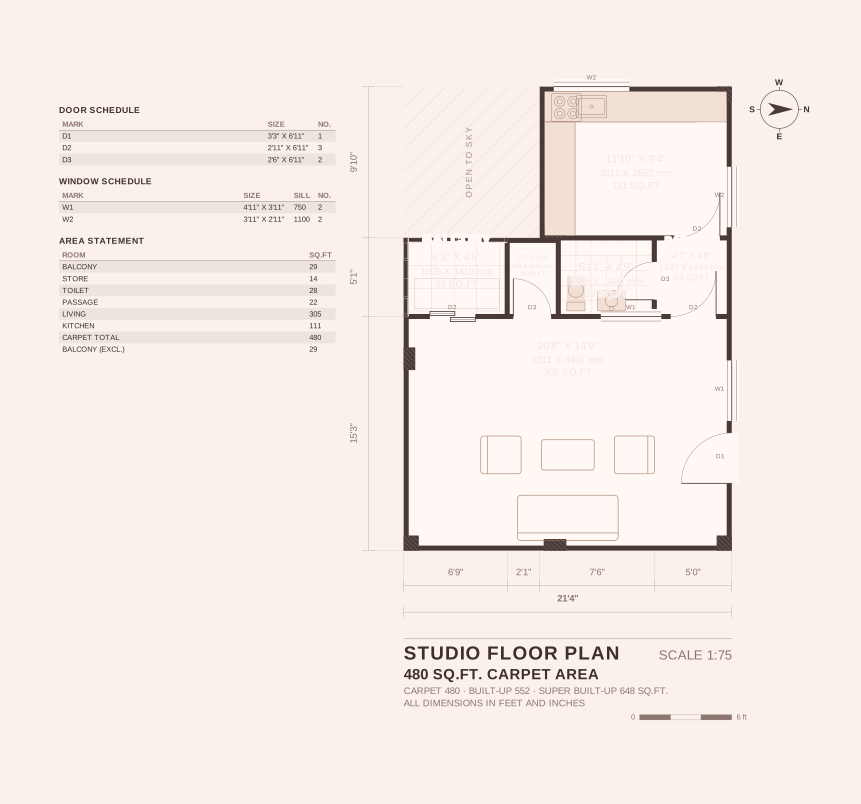
- unit
- STUDIO · 480 sq ft · 44.63 m²
- programme
- 6 rooms · 1 toilet · 1 balcony
- geometry
- L footprint · central lobby · W facing
- drawing
- feet and inches · blush · technical · studio-line
- score
- 96.9 · 23.6 KB
Labels come from two places and both travel with the file. The illustration line writes Dublin Core RDF into every SVG, so the caption survives even if the file is moved out of the pack; every collection also ships a CSV index with one row per asset on the schema shown above. Where a caption needs to be richer than the tags — a written description for image–text training, say — that is a commissioned pass we can run over any release.
A file on its own is not a dataset.
Every asset ships with its own metadata row. The artwork is one field of it; the rest is what makes the artwork searchable, filterable and trainable. This is a real row from the floor-plan index, not a schema sketch.
- Source The SVG itself — live text, self-contained, nothing outlined
- Preview A PNG of the whole page, one per file
- Metadata One CSV row per asset, on the schema shown here
- Embedded Dublin Core RDF on the illustration line: title, creator, tags, category, niche
- Index A catalogue index describing the pack line by line
- Sheet A contact sheet of the batch, still vector and still zoomable
- Licence What is settled about rights, and what is not
- Geometry Path and text-node counts, page size, file size
Not scraped. Submitted.
The difference between a crawl and a catalogue is that someone chose to be in the catalogue. Every file here arrived because a creator uploaded it and agreed to the terms attached to it.
No model made this
No generative model produced any part of any file in these packs. Every page was composed from vector artwork and typographic systems that people built. For anyone training a design model, that means the data is not quietly recycling another model’s output.
Consent at the file, not the footer
Creators grant training rights per submission under a named, versioned agreement. No blanket clause buried in a sign-up flow. If the grant changes, they re-sign it or their files stay out of the next release.
Nothing reaches outside itself
No file references a font, an image or an asset it does not carry. Verified across the whole review sample: zero remote references in 191 files. Faces are either embedded as data URIs under a libre licence, or named system faces with generic fallbacks, so no font licence travels with a file.
Placeholders, plainly labelled
No page describes a real organisation, a real building or a real measurement. Names, figures and areas are written placeholders that are internally consistent — a page agrees with itself — and none of it should be presented, or trained on, as fact.